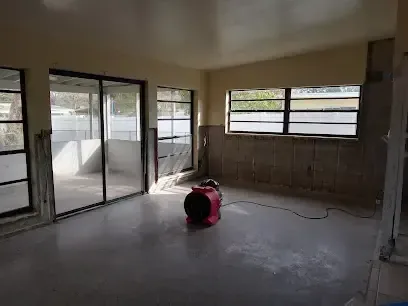
Rain that runs off yards, hillsides and drains and then enters a house is not clean water. What happens on the first day decides how much of the house can be saved.
Key takeaways
- Storm water that enters a house is handled as Category 3 from the start, so soaked carpet, pad and low drywall are removed instead of dried.
- FEMA revised the city's flood insurance rate maps for the Arroyo Simi and the Walnut Canyon Drain, so the current map for an address is worth asking about.
- The city averages about 17.4 inches of rain a year, and February is the wettest month at 5.0 inches.
- Dated photos, a list of damaged items and moisture readings make an insurance claim easier to support.
- A house is dry when readings sit within 2 to 4 points of a dry reference, not when a surface feels dry.
Why storm water counts as contaminated
Storm water collects soil, animal waste, motor oil and lawn products on its way across a yard, a street or a gutter. By the time it reaches a door or a garage slab, it is no longer the clean water that comes out of a tap.
The restoration team classes it as Category 3, the same class used for sewage, even when it looks like muddy rain.
Category 3 changes the plan. Porous materials that soaked up the water are cut out and hauled away, because cleaning them does not make them safe to leave inside a wall or under a floor.
- Carpet and pad that sat in the water are removed.
- Drywall and insulation that wicked water upward are cut out above the wet mark.
- Hard surfaces such as tile and sealed concrete are cleaned and treated, then dried.
- Cabinet bases, baseboards and door trim are pulled where water got behind them.
The Arroyo Simi, Calleguas Creek and the revised flood maps
Central Moorpark lies in a valley created by the Arroyo Simi. Today the Arroyo Simi is mostly a concrete lined drain, and it merges with the Arroyo Las Posas by Hitch Road.
The Arroyo Simi is a tributary of Calleguas Creek, and the Calleguas Creek watershed drains Simi Valley, Moorpark, Camarillo and much of Thousand Oaks to Mugu Lagoon.
FEMA issued Letters of Map Revision that changed the city's flood insurance rate maps for the Arroyo Simi and for the Walnut Canyon Drain.
A map revision does not predict a flood on any one street. It changes the maps that lenders and insurers read, so it helps to ask which version applies to a given address.
- Does the policy cover water that enters from outside the house?
- Is a separate flood policy in place, and what does it cover?
- Which flood map version applies to this address?
- What proof does the insurer want for storm water damage?
How much rain Moorpark gets, and when
The city averages about 17.4 inches of rain a year. February is the wettest month at 5.0 inches, followed by January at 3.7 inches and December at 2.5 inches.
That puts the highest odds of storm water reaching a home in the winter months. A yard drain or a roof that handled a light rain can fall behind in a heavy one.
A yard that slopes toward the house, a blocked drain or a gutter that overflows beside a door raises those odds further.
Storm water usually enters the same ways: over a low door sill, under a garage door or through a wall at ground level.
The first day after storm water enters a house
Safety comes before saving belongings. Standing water and electricity do not mix, and storm water carries contamination.
- Keep children and pets out of the water.
- Leave wet outlets and the electrical panel alone unless the panel is dry and easy to reach; otherwise leave it for an electrician.
- Photograph the wet mark on the walls, the floors and every damaged item before anything is moved.
- Lift furniture and valuables onto dry surfaces.
- Do not run a household vacuum or fan through standing water.
Extraction comes first
Water extraction pulls standing water from floors before it wicks into walls. Truck-mounted and portable units lift water out of carpet, tile and concrete.
Water left standing keeps climbing into drywall and cabinet bases, so removing it early limits how much has to be cut out later.
Then removal and the dry-out
Next the crew removes what cannot be saved and sets up the dry-out. The storm and flood water cleanup work follows that order every time.
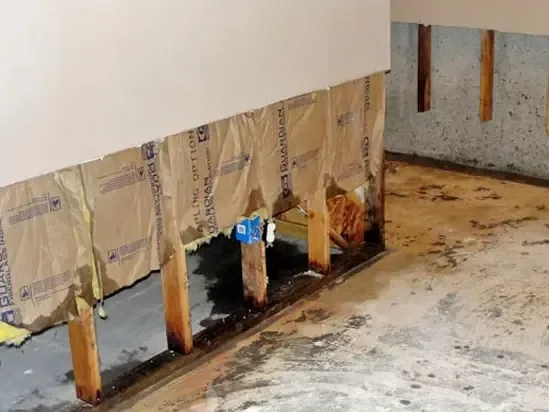
Drying and how the finish is measured
Drying starts once the water and the ruined materials are gone. Air movers push dry air across wet surfaces while dehumidifiers pull moisture out of the room.
Structural drying is measured with moisture meters. Framing, subfloor, drywall and concrete are read at each visit and compared with a dry reference.
The goal is readings within 2 to 4 points of that reference. A wall that feels dry to the hand can still hold moisture.
Materials left wet for 24 to 48 hours begin to support mold growth, which is why removal and drying begin right away.
Records, insurance and costs
Coverage for storm water depends on the policy and on how the water entered, so the wording matters more than assumptions. A claim goes more smoothly with records made at the time.
- Dated photos and video of the water, the damaged rooms and the belongings.
- A written list of damaged items with their approximate age and value.
- The restoration team's moisture readings and daily drying logs.
- Receipts for emergency steps such as hauling or temporary repairs.
Costs depend on rooms and water type
Costs rise with the number of wet rooms and the time the water sat. The water damage cost calculator turns room count and water type into a range.
Questions to settle before repairs begin
Cleanup decisions are easier once a few questions have answers. The restoration team, the insurer and the homeowner each hold part of the picture.
Depth and time matter most. Water that stood for a day wicks higher into drywall than water that was removed quickly, and porous materials absorb more the longer they sit.
Where the water entered matters too. Water through a garage door usually wets a slab and the base of the walls, while water through a living room door reaches carpet and pad.
- How deep did the water get, and how long did it stand?
- Did it enter at one door or at several?
- Which rooms share a floor with the wet area?
- Are there documents, photos or electronics that need separate handling?
- Is anyone in the household sensitive to contamination, such as an infant, an older adult or someone with a weakened immune system?
Questions
Is storm water in a house really that dirty?
Yes. Storm water crosses yards, streets and drains before it reaches a door, so it carries soil, bacteria and chemicals. That is why it is handled as Category 3.
Does a flood map revision mean a home is in a flood area?
No. A revision updates the map used by lenders and insurers. The insurer or lender can say how the current map treats a specific address.
Which month brings the most rain?
February, at 5.0 inches on average, ahead of January at 3.7 inches and December at 2.5 inches.
Can wet carpet be saved after storm water?
Carpet and pad that sat in storm water are normally removed, because the water is contaminated and the pad holds it. Hard floors can often be cleaned and dried instead.
How does the team know the house is dry?
Moisture meters read framing, drywall, subfloor and concrete against a dry reference. Equipment comes out when readings sit within 2 to 4 points of that reference.