Water Damage Restoration Port Hueneme, CA
For a Port Hueneme home hit by a failed pipe, a leaking appliance or a winter storm, the restoration team removes standing water, opens only the walls that read wet, and dries the structure to a metered finish.
(888) 578-6508Call about water in your Hueneme home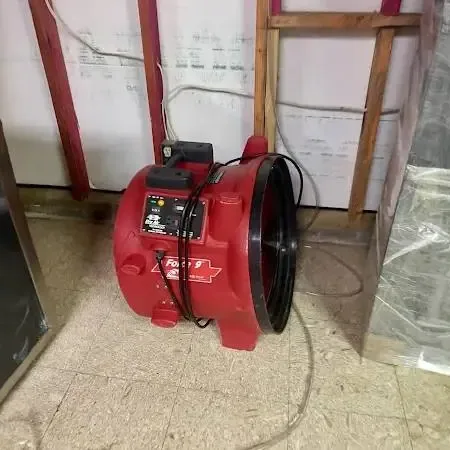
What shapes water damage in Port Hueneme
A beach city on the Oxnard Plain gets about 15 inches of precipitation a year, nearly all of it as winter rain, so most storm and roof problems arrive in a few wet months.
Heavy single-night rain
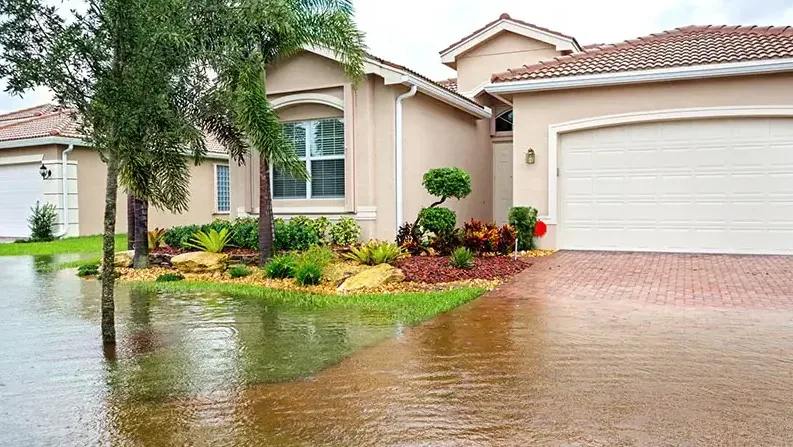
The December 2023 storm showed that a winter low can drop a great deal of water in one night, which is when garages and ground floors take on water.
Storm drains and street water
City Public Works lists a storm drain rehab at Pearson Road and 8th Street, and a 2014 account describes a continuing routine to keep ocean water from sitting on streets.
Shared walls and floors
About 54.0 percent of households rent and 38.7 percent of housing units are multi-family, so a leak in one unit can reach a neighbor below or beside it.
Homes of many ages
About 39.2 percent of housing was built before 1970, so the materials behind the walls differ from house to house and the crew checks each with a meter.
Harbor and commercial buildings
The Port of Hueneme, Naval Base Ventura County and the businesses along Channel Islands Boulevard mean water losses also hit shops and offices, which are dried in phases.
December 21, 2023
A cutoff low storm brought flooding to Ventura County. In Port Hueneme, evacuation orders covered four streets and about 60 houses in one senior community were affected.
Water losses the crew handles here
From a split supply hose to a flooded garage, the restoration team covers the common ways water reaches a home or shop in town, in the twelve services below.
Water Extraction and Removal
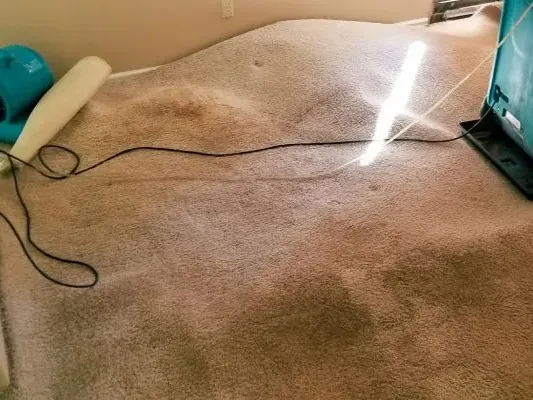
Pumps and wet vacuums pull pooled water out of carpet, tile and slab floors first, because standing water keeps spreading until it is gone.
Water removal, start to finish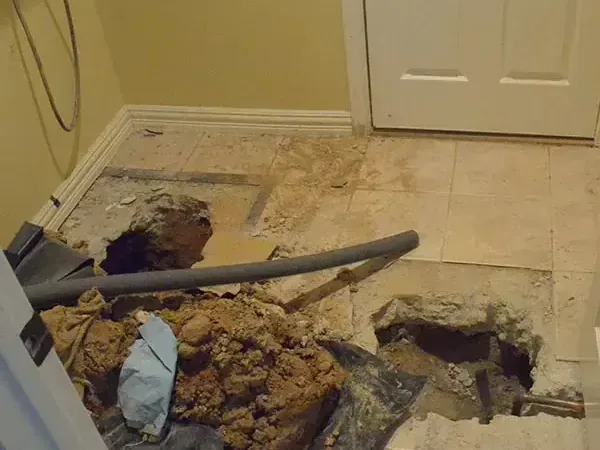
Slab Leak Water Damage
When a leak sits under the slab, a plumber finds it, wet flooring lifts out, and the concrete and wall bases are dried.
Drying out a slab leak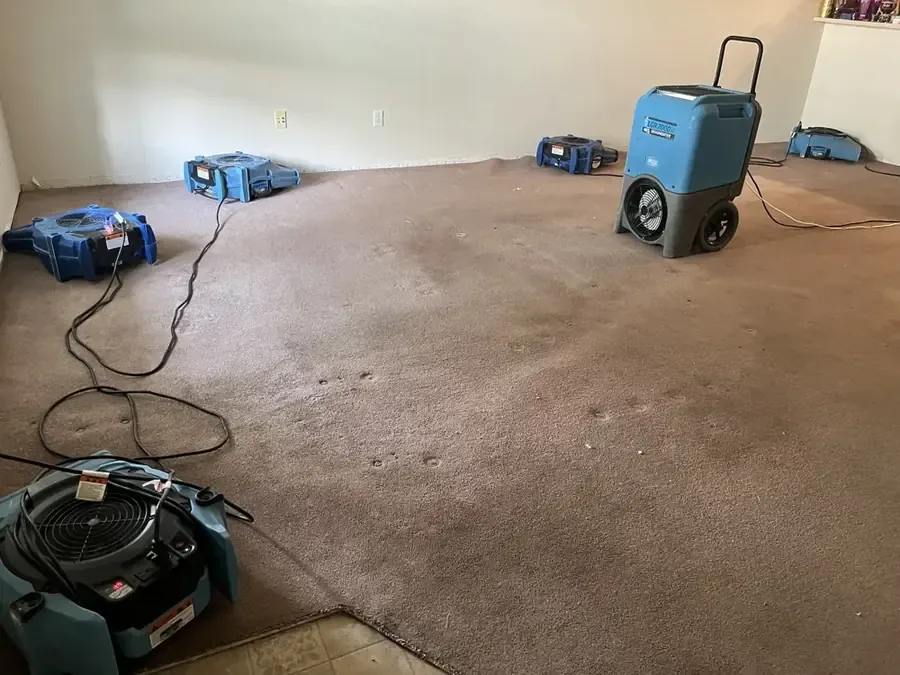
Burst Pipe Water Damage
A split pipe or failed fitting inside a wall or ceiling is stopped, the water extracted, and only the wet sections opened for drying.
After a supply line splits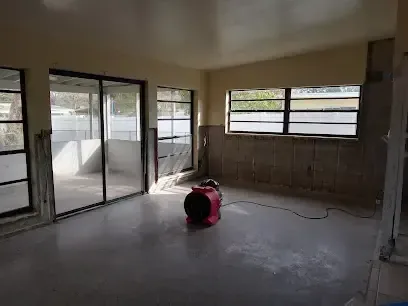
Storm and Flood Water Cleanup
Winter storm water that reaches a garage or ground floor is treated as contaminated, removed, and the rooms dried and cleaned.
Storm runoff cleanup steps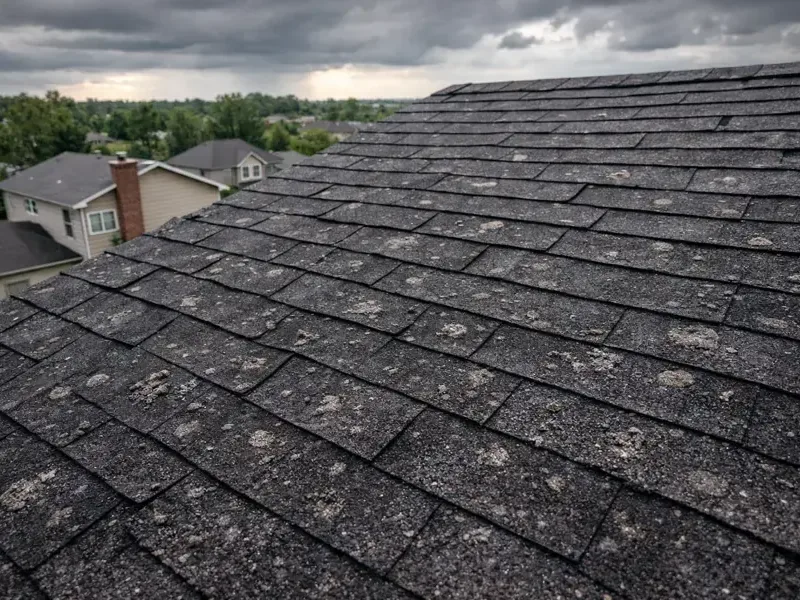
Roof Leak Water Damage
Rain that gets past the roof covering wets the attic and the ceiling below, so wet insulation comes out and the ceiling is dried.
Attic and roof leak drying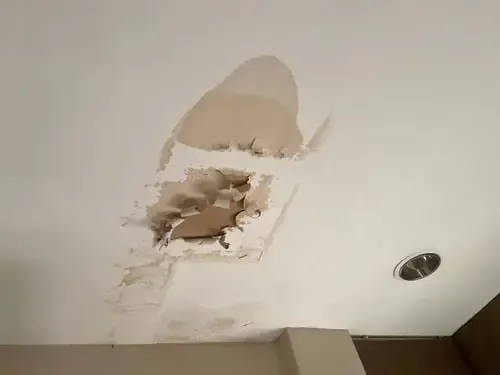
Ceiling Leak Water Damage
A stained or sagging ceiling is traced to its source, the wet drywall is cut out safely, and the joist bays are dried.
Opening a wet ceiling safely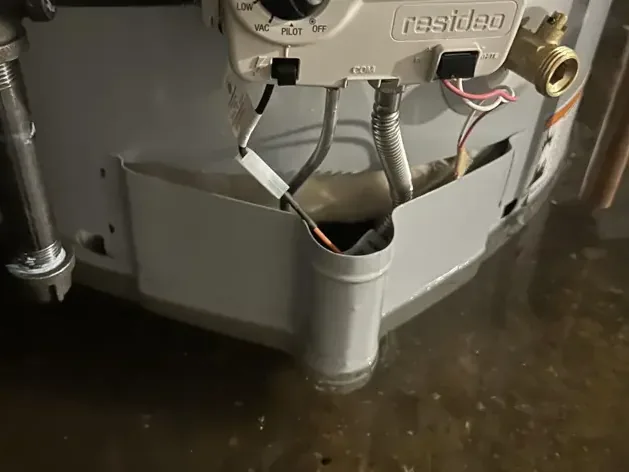
Water Heater Leak Cleanup
A tank that fails in a garage or closet is pumped out before water spreads into drywall, cabinets and stored belongings.
When the garage tank lets go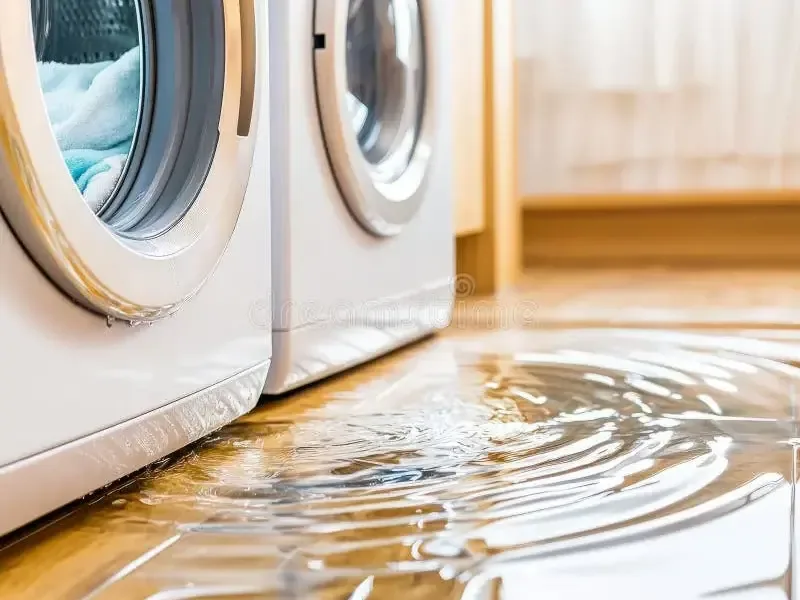
Appliance and Supply Line Leaks
Washer hoses, dishwasher supply hoses and refrigerator tubing that leak are cleared from floors, cabinets and the subfloor.
Hose and supply line leaks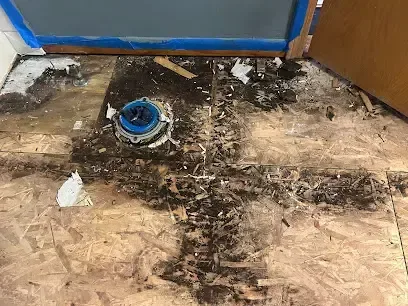
Sewage Backup Cleanup
A backup through a toilet, tub or floor drain is handled as contaminated water, with porous materials removed and surfaces treated.
Category 3 backup cleanup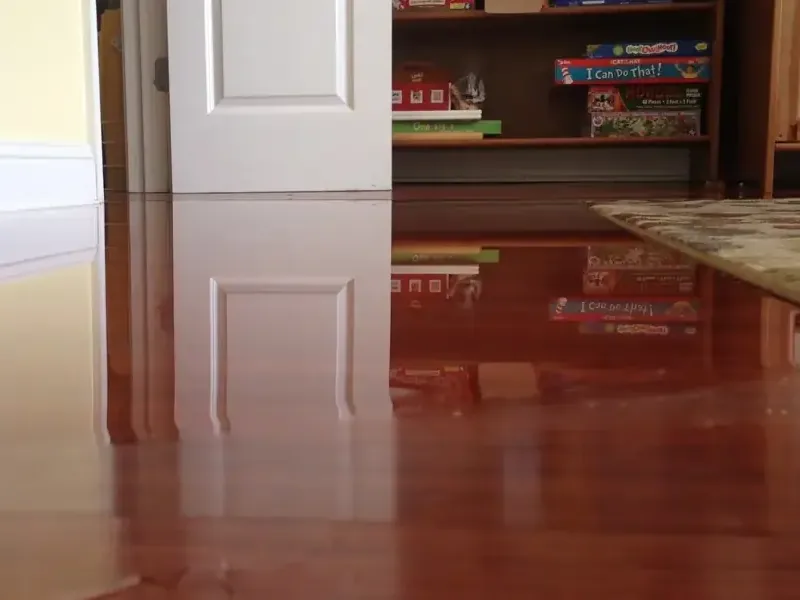
Hardwood and Laminate Floor Drying
Cupped boards and swollen laminate are dried with floor mats and dehumidifiers, or lifted when readings show they cannot recover.
Saving cupped wood floors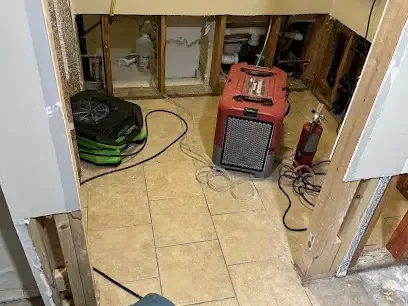
Structural Drying and Dehumidification
Framing, drywall, subfloor and concrete are dried with air movers and dehumidifiers until readings match a dry reference.
How dry gets measured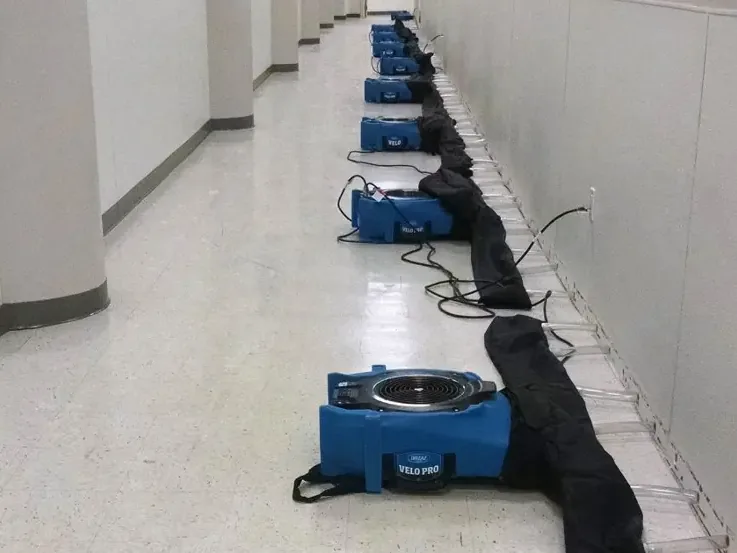
Commercial Water Damage
Shops, offices and storefronts are dried in phases so doors can stay open and work can carry on in the dry areas.
Phased drying for businessesFive steps to take as soon as water appears
- 1
Shut off the water source
If a pipe, hose or heater is the cause, close the valve for that fixture or the main shutoff so the flow stops adding to the loss.
- 2
Keep clear of wet electrical
Switch off power to soaked rooms from the panel if it is safe, and stay away from outlets, cords and ceilings that sag.
- 3
Photograph the damage
Take wide and close photos of the wet floors, walls, belongings and the source before anything is moved, for the insurance claim.
- 4
Call the drying crew
Describe the source, the rooms affected and whether the water was clean, gray or sewage, and the crew will plan the equipment.
- 5
Lift small items up
Move rugs, electronics and paper onto dry furniture or counters, but leave heavy furniture and wet drywall for the crew.
Crew coverage from the harbor to the beach
The restoration team works homes and shops across the city, from the blocks around Bolker Park to Point Hueneme and the streets by the Waterfront Promenade.
Houses, apartments and condos all get the same moisture-led process, and commercial units along Channel Islands Boulevard are dried in phases.
(888) 578-6508Ask the crew about your streetDry means a number on the meter, not a feeling
The work follows the IICRC S500 drying standard: wet materials are measured, equipment is placed to match, and the job ends only when readings reach a dry reference.
Find the wet
A moisture meter and thermal camera mark how far water has traveled behind baseboards, under flooring and inside wall cavities.
Remove the water
Pumps and vacuums take standing water out, and wet padding or soaked drywall that cannot dry is cut away and bagged.
Dry the structure
Air movers push dry air across surfaces while dehumidifiers pull moisture out of the room, with equipment moved as readings change.
Confirm the finish
Final readings are compared with a dry reference, and the logged numbers go to the homeowner and the insurer.
Water damage help across Port Hueneme
Streets and landmarks
Nearby communities
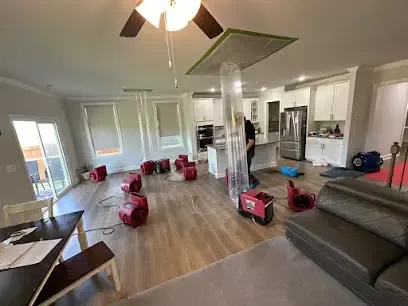
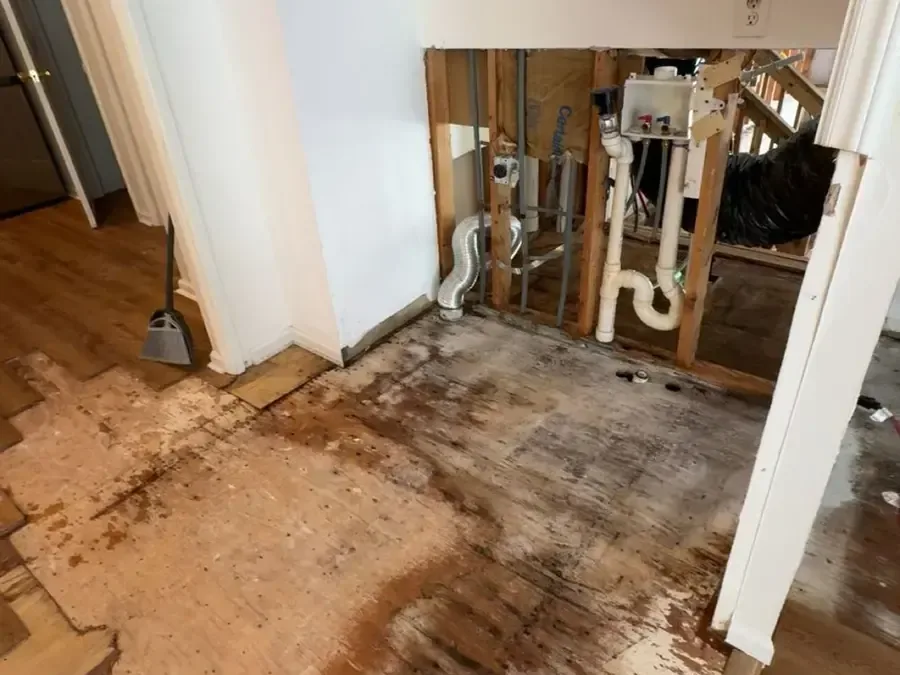
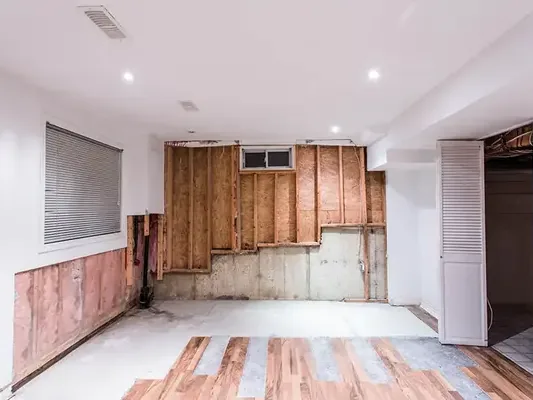
What drying work looks like in a home
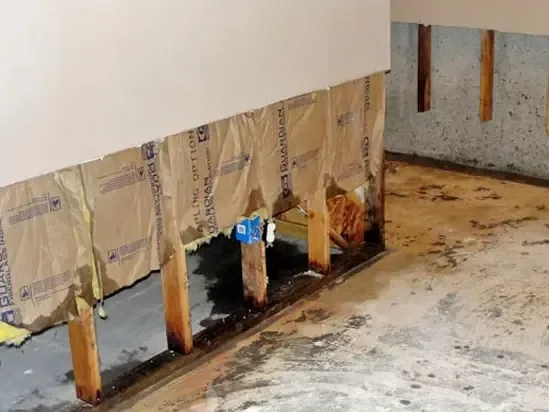
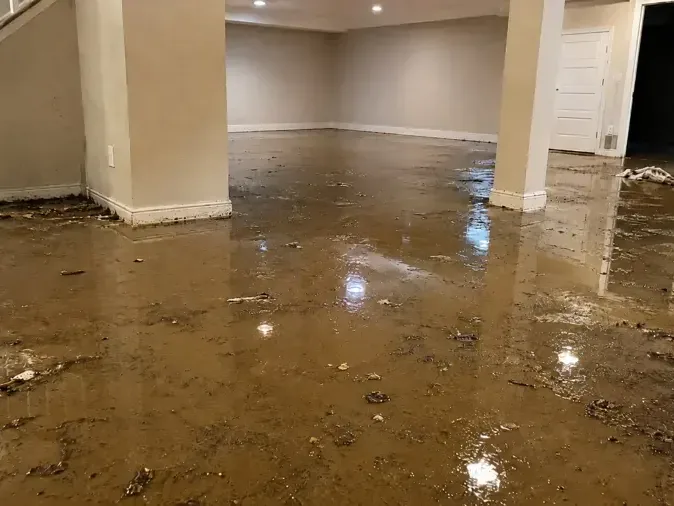
Dry work that follows readings, not guesses
Moisture mapped first
A meter and a thermal camera trace the wet area through floors and walls, so the crew opens only what the readings point to.
Equipment sized to the room
Air movers and dehumidifiers are set for the size and wetness of each space, then moved as the readings fall.
Photos and readings kept
Dated photos and moisture logs are saved from the first scan to the final reading, giving an insurer a clear record of the work.
Clean water or contaminated
The crew sorts the water as clean, gray or sewage first, since that decides what can be dried and what must be removed.
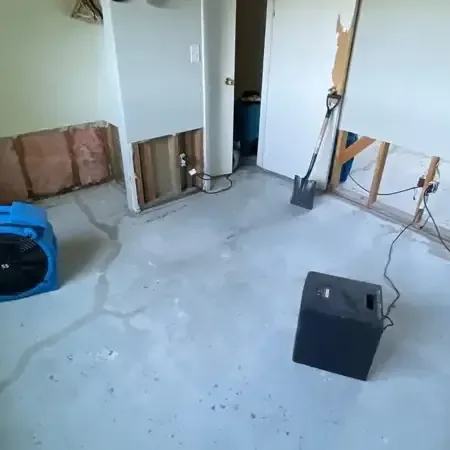
In a coastal city with wet winters, the difference between a dried wall and a rebuilt one often comes down to how fast the water is found and measured.
Three kinds of water, three kinds of cleanup
What water damage restoration usually costs in town
Most jobs land between $1,200 for one wet room and $25,000 or more for a large loss, depending on how many rooms are wet and whether the water was clean or contaminated.
One room, clean water
- Pump-out of one room
- Air movers and a dehumidifier
- Moisture readings until dry
Several rooms or a ceiling and wall below
- Wet drywall cut out
- Padding removed
- Drying equipment set
Large or contaminated loss
- Whole floor cleared
- Contaminated materials removed
- Surfaces treated
These ranges are typical, not a quote. The final figure depends on the rooms involved, the water category, and how much drywall or flooring has to be replaced.
Documenting the loss for your insurer
Insurers usually ask what happened, when it happened and what was damaged, so the restoration team records each step from the first scan.
- Photos of the source and each wet room
- Dated moisture readings for every room
- A list of materials that were removed
- Equipment placed and when it was removed
- A written scope of the drying work
Handling the claim yourself
Report the loss to the insurer promptly, share the photos and readings, and ask what the policy says about water from a sudden pipe or appliance failure.
Keep damaged items until the adjuster has seen them, and save receipts for any emergency purchases made while the drying is under way.
Common water damage questions
How fast does water damage spread through a house?
Water wicks into drywall, padding and framing within hours, and materials that stay wet for 24 to 48 hours risk mold growth, so extraction and drying should begin once the source is stopped.
Does homeowners insurance pay for water damage?
Many policies cover sudden losses such as a burst pipe or a failed appliance and exclude slow seepage, so the policy wording and the adjuster decide; photos and readings help the claim.
What does water damage restoration cost here?
Most jobs fall between $1,200 for one wet room and $25,000 or more for a whole floor or a sewage loss, and the final price follows the rooms, the water category and the materials removed.
Can wet carpet and drywall be saved?
Clean-water carpet can often be dried in place with the padding replaced, and damp drywall can dry inside the wall, but sewage-soaked materials are removed rather than dried.
Why are so many fans and dehumidifiers needed?
Air movers push dry air across wet surfaces and dehumidifiers pull the moisture out of the room, so both are needed to move water out of walls, floors and framing, as in structural drying.
I rent in a multi-family building. What should I do after a leak?
Stop the source if it can be reached, tell the landlord or property manager at once, photograph the damage, and call for drying; the lease and the building's coverage decide who pays.
Is storm water handled differently from a pipe leak?
Yes. Storm water carries dirt and contaminants from yards and streets, so it is treated as contaminated, and porous materials it soaks are usually removed. Storm and flood cleanup covers the steps.
Does the crew have to tear out my walls?
Only where the meter finds wet insulation or drywall that cannot dry in place. Small flood cuts above the wet line are common, and sound walls are left alone.
How long does the drying take?
The readings decide, not the calendar. Drywall, framing, subfloor and concrete dry at different rates, so the crew checks each one and removes equipment only when every reading reaches the dry reference.
What should be moved before the drying crew starts?
Lift small valuables, paper, electronics and rugs onto dry surfaces, but leave heavy furniture and wet building materials in place for the crew.
Water in your home does not wait, and neither should the drying
Call any hour, describe what happened, and the restoration team will set the first steps and equipment for your rooms.
(888) 578-6508Call to start the drying