Structural Drying in Port Hueneme, CA
After the water is out, the walls, floors and framing still hold moisture. Air movers and dehumidifiers dry them in a planned layout, and meter readings decide when the equipment can leave.
(888) 578-6508Call about wet walls and floors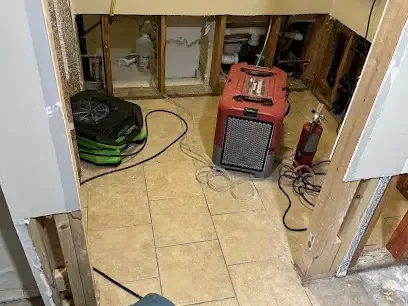
Water that is pumped out of a room has often already moved into the drywall, the baseboards and the framing. In a coastal city with wet winters, and after events like the December 21, 2023 flood that affected about 60 houses in one senior community, the same pattern shows up: the standing water is gone, but the building is still wet inside. Drying has to reach inside the materials, not just the surface, or the dampness comes back as swelling, stains and odors.
How structural drying and dehumidification is handled, step by step
Map the moisture
Meters mark the wet areas.
Set the equipment
Air movers and dehumidifiers are placed.
Check the readings
Numbers are logged on each visit.
Remove and finish
Equipment goes when readings are dry.
How the equipment is placed
Equipment follows the water, not a fixed formula, so every layout differs.
- Air movers push dry air along walls and across floors.
- Dehumidifiers pull moisture out of the room air so drying keeps going.
- Wall cavities are vented so trapped moisture can escape.
- Heavy materials such as concrete and framing get longer runs.
The layout is adjusted whenever the readings change, so equipment moves from dry areas to the ones that lag behind.
Walls and floors still damp? Call any hour for a drying plan.
(888) 578-6508Call about the damp structureReading the progress
Meters turn a guess into a record.
- Readings are taken from the same spots each visit
- Wet and dry reference points are compared
- Equipment is removed as each area clears
The final numbers show the insurer that the structure is dry.
What comes after drying
Once the readings reach the dry reference, the rooms can be rebuilt or refinished. Most jobs start with water extraction, and wood floors may need hardwood and laminate floor drying.
What does structural drying and dehumidification cost in Port Hueneme, CA?
Drying costs follow the size of the wet area and the class of loss, from $1,200 for one room with light moisture to $20,000 when slabs and wood framing are involved and the equipment must run longer.
One room, Class 1 or 2
- Air movers placed
- One dehumidifier
- Readings logged
Several rooms, Class 3
- Multiple rooms dried
- Walls vented
- Equipment adjusted
Class 4, slabs and wood
- Specialty dehumidifiers
- Framing dried
- Extended monitoring
What moves the number
Ranges are typical, not a quote. The category of water, the square footage, the material class and how fast drying started move the number most. Run the water damage cost calculator for a closer range.
First steps for structural drying and dehumidification
Clear the area
Keep clear of the equipment cords and leave fans running.
Keep doors closed
A closed room dries faster and the dehumidifiers work better.
Do not turn off
Leave the equipment on until the crew removes it.
Call with questions
Report odd smells or noises so the layout can be checked.
Structural drying and dehumidification across Port Hueneme and nearby communities
Structural drying covers houses, apartments, condos and shops across the city, from Point Hueneme to the Bolker Park area, in any building where water has soaked past the surface into walls, floors or framing.
The same service nearby: structural drying and dehumidification in Moorpark, Oxnard, Ventura.
Water damage restoration in Port Hueneme · every town covered
Related water damage services in Port Hueneme
Structural Drying and Dehumidification questions in Port Hueneme, CA
Why does drying take so long?
Drywall, framing, subfloor and concrete release moisture slowly, and the readings, not a calendar, decide when each material is dry.
Can a fan from the hardware store do the same job?
A single fan moves air but does not remove moisture. Dehumidifiers, placement and meter readings are what finish the drying. Without a dehumidifier the same moisture just stays in the room air.
Does the equipment use a lot of power?
It does draw power while running, and the crew places and sizes it so it dries efficiently without running longer than needed.
What do the classes of loss mean?
The classes describe how much water was absorbed and how much evaporation is needed, from light moisture in one room up to wet slabs and framing.
When is the structure dry?
When meter readings in each material match a dry reference, the crew removes the equipment and gives the owner the logged numbers.
Moisture left inside the walls keeps causing damage
Call any hour, say which rooms got wet, and the drying crew will set the equipment and track the readings to a dry finish.
(888) 578-6508Call to plan the drying