Structural Drying and Dehumidification in Oxnard, CA
Once the standing water is gone, moisture stays in framing, subfloors and finishes. The drying team places air movers and dehumidifiers by the class of loss and reads the materials every day until they are dry.
(888) 578-6508Set the drying plan tonight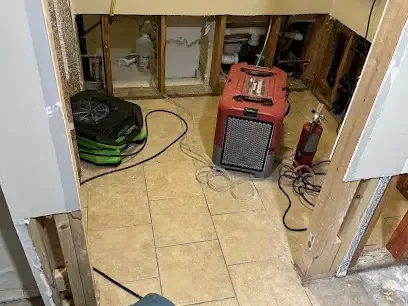
After the water is removed, the structure is still wet. Framing, subfloors, drywall and finishes in a mix of historic houses, one and two story homes and commercial buildings each dry at their own pace, and the mild coastal climate does not remove the need for equipment and readings.
How structural drying and dehumidification is handled, step by step
Set the class
Water category and materials set the plan.
Place equipment
Air movers and dehumidifiers go in.
Read daily
Moisture is checked at set spots.
Remove equipment
Machines leave when readings match.
How the dry-out is planned
The plan comes from the water category, the class of loss and the materials involved.
- The class of loss sets the equipment count
- Air movers push dry air across wet surfaces
- Dehumidifiers pull moisture out of the room air
- Containment keeps humid air from other rooms
Meters and an infrared camera direct where equipment goes, and water extraction comes first when water is still standing.
Water gone but walls still damp? The drying team sets equipment day or night.
(888) 578-6508Get the structure driedDaily readings, not a calendar
Drying is finished when the numbers say so.
- Readings are taken at the same spots each day
- An untouched dry room supplies the reference
- Equipment is moved as the wet areas shrink
No fixed number of days is promised, because the materials decide, and a slab leak floor can take longer than drywall.
Cavities, floors and ceilings
Wall cavities get directed airflow through small openings, floors get mats or panels, and ceilings are opened when insulation holds water. Dense materials such as concrete may need desiccant units. When the readings match the dry reference, the equipment is removed and the report goes to the owner and the insurer, ready for repairs or a ceiling leak rebuild.
What does structural drying and dehumidification cost in Oxnard, CA?
Structural drying here usually costs $1,200 to $20,000, depending on the class of loss, the number of rooms, the materials involved and how many days the equipment runs. Dense slabs and wood framing cost the most to dry.
One room, Class 1 or 2
- Air movers set
- A dehumidifier running
- Daily readings
Several rooms, Class 3
- More equipment
- Walls opened
- Longer monitoring
Class 4, slabs and wood
- Desiccant units
- Dense materials dried
- Extended readings
What moves the number
Ranges are typical, not a quote. The category of water, the square footage, the material class and how fast drying started move the number most. Run the water damage cost calculator for a closer range.
First steps for structural drying and dehumidification
Keep the power on
Leave the equipment circuits alone once it is set.
Close doors and windows
This keeps humid air out of the drying area.
Leave the machines in place
Placement follows the readings.
Report any new wet spot
Tell the crew if a stain or smell appears.
Structural drying and dehumidification across Oxnard and nearby communities
The drying team covers ZIP codes 93030 to 93036 and sets equipment in historic houses, one and two story homes and commercial buildings, from downtown and La Colonia to River Ridge, the harbor area and the Highway 101 corridor.
The same service nearby: structural drying and dehumidification in Moorpark, Port Hueneme, Ventura.
Related water damage services in Oxnard
Structural Drying and Dehumidification questions in Oxnard, CA
What does structural drying involve?
Air movers push dry air across wet surfaces while dehumidifiers pull moisture out of the room. Meters show which materials are still wet, and equipment is adjusted every day.
Is drying needed after the water is gone?
Yes. Moisture stays inside framing, subfloors and drywall long after the standing water is removed, and unchecked it can lead to mold and rot.
How long will the equipment run?
It runs until the readings match the dry reference. The materials, the class of loss and the weather change the time, so no fixed number of days is promised.
Why are the machines so loud?
Air movers and dehumidifiers run all day to keep the moisture moving out. The noise is the sign that drying is working, and the crew explains how to keep the area closed.
Do walls have to be opened?
Sometimes. Small holes or removed baseboards let air reach the cavity, and wet insulation or swollen drywall is cut out when it cannot dry in place.
How is dryness proven?
Daily readings are compared with an untouched dry reference in the same building. The final report shows the numbers and goes to the owner and the insurer.
Wet framing or subfloor? Start the drying plan.
Moisture stays in framing and subfloors after the water is out. The team dries the building until the readings match.
(888) 578-6508Set the drying plan