Structural Drying and Dehumidification in Ventura, CA
Once standing water is gone, moisture stays in framing, subfloors and drywall. Dehumidifiers and air movers pull it out, and daily readings show whether the building is actually drying.
(888) 578-6508Ask about drying the walls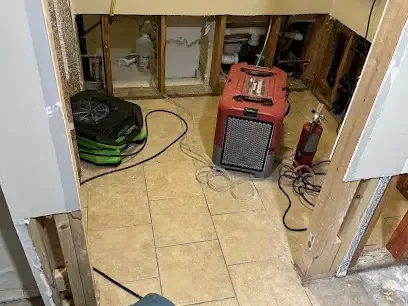
Extraction removes the water you can see. Structural drying removes the water you cannot, the moisture held inside framing, subfloors and finishes. Ventura's buildings range from structures dating to the 1920s oil boom downtown to the 44,612 housing units counted in 2020, and every one of them dries the same way: by moving moisture into the air and out of the room.
How structural drying and dehumidification is handled, step by step
Map the damp
Meters show what is wet.
Place
Equipment is sized to the room.
Monitor
Readings are logged each visit.
Release
Equipment leaves once readings are dry.
How drying equipment works
Air movers and dehumidifiers do different jobs.
- Air movers sweep dry air across wet surfaces and into cavities
- Dehumidifiers pull the released moisture out of the air
- Closed doors and plastic keep the wet area from sharing humidity with dry rooms
- Temperature and humidity are checked to keep the process efficient
More equipment is not always better, so the number of units follows the size and class of the loss.
Water gone but the walls still damp? Describe it and the crew will explain what the drying involves.
(888) 578-6508Ask about the drying planDrying classes in plain terms
The class describes how much of the building the water reached and how absorbent the materials are.
- Class 1: little water, low absorption
- Class 2: a whole room with wet carpet and walls
- Class 3: water from above, soaking ceilings, walls and floors
- Class 4: dense materials such as slabs and hardwood
The class sets the equipment plan and the likely number of visits.
Proof that it is dry
Each visit, the crew records moisture readings, adjusts equipment and removes it only when the numbers match a dry reference. See water extraction for the step before this one, and structural drying and dehumidification for the overview.
What does structural drying and dehumidification cost in Ventura, CA?
Structural drying costs from $1,200 for one room in Class 1 or 2 to $20,000 for Class 4 work in slabs and wood, since heavier classes need more equipment, more days and more visits to confirm results.
One room, Class 1 or 2
- Equipment in one room
- Daily readings
- Short run
Several rooms, Class 3
- More air movers and dehumidifiers
- Wall cavities dried
- Several visits
Class 4, slabs and wood
- Dense materials dried
- Specialty equipment
- Extended monitoring
What moves the number
Ranges are typical, not a quote. The category of water, the square footage, the material class and how fast drying started move the number most. Run the water damage cost calculator for a closer range.
First steps for structural drying and dehumidification
Map the moisture
Meters and thermal imaging show which materials are wet.
Place the equipment
Air movers and dehumidifiers are sized to the loss.
Monitor each visit
Readings are logged and equipment moves as materials dry.
Confirm and release
The job closes only when readings match a dry reference.
Structural drying and dehumidification across Ventura and nearby communities
Structural drying covers houses, apartments and commercial buildings across Ventura, from the older blocks Downtown to Midtown, the Westside, Montalvo and the east side, after any kind of water loss, from a leak or a storm to an overflow.
The same service nearby: structural drying and dehumidification in Moorpark, Oxnard, Port Hueneme.
Related water damage services in Ventura
Structural Drying and Dehumidification questions in Ventura, CA
How long does structural drying take?
Light losses often dry in a few days, while heavier ones take longer. The equipment stays until the meters match a dry reference.
Why is the equipment so loud?
Air movers and dehumidifiers run all day to move moisture out of the building. Running them is what keeps the drying time short.
Can I turn the equipment off at night?
It works around the clock, and shutting it down lets moisture settle back into the materials. Ask the crew if noise is a concern.
Why does the house feel warm and humid?
Dehumidifiers release heat as they pull moisture from the air. The warmth helps drying, so keep doors and windows closed.
What if walls are still damp after drying?
That means there is more work to do. Cavities may need opening, or the equipment plan may need adjusting based on new readings.
Does drying prevent mold?
It lowers the risk, because mold needs 24 to 48 hours of damp conditions. Prompt extraction and steady drying are the best defense. See hardwood and laminate drying for floors.
Water that cannot be seen still needs to come out of the building
Call now, any hour, and tell the response team how far the water spread and what the walls and floors are made of.
(888) 578-6508Ventura drying help