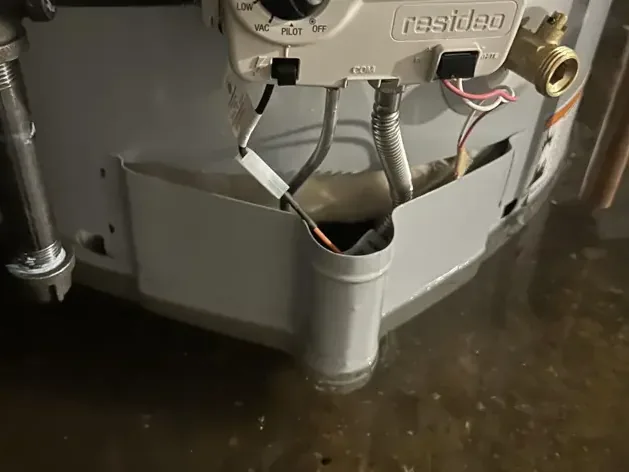
A water heater that fails sends everything in the tank across the floor at once, and the first rooms to feel it are usually a garage, a closet or a laundry area.
Key takeaways
- Over 75 percent of Moorpark homes were built after 1980, much of it in Peach Hill and Mountain Meadows south of the Arroyo Simi.
- A home's age is not the heater's age, because tanks get replaced, so the label on the heater tells its own story.
- Closing the cold water inlet valve stops new water, and extraction removes what is already on the floor.
- Water in a garage spreads across the slab, while water in a closet climbs into walls and cabinets.
- Drywall, baseboards and stored belongings are what quick extraction protects first.
Why a tank failure floods so quickly
A tank water heater holds a full tank of water at all times. When a seam, a fitting or a valve gives way, that water has nowhere to go but out.
A slow weep behaves differently. It drips for weeks, wets the floor edge and rusts the base, so by the time anyone notices, the floor and nearby walls are already damp.
Water from a tank is usually clean water, which lets more materials be saved than after storm water or sewage. Speed still matters, because clean water becomes a bigger problem the longer it sits.
Water from a heater can be hot enough to scald. Bare feet and bare hands stay out of the pool until the water has cooled.
Homes built after 1980 in Peach Hill and Mountain Meadows
Over 75 percent of Moorpark homes were built after 1980. Much of that building is in Peach Hill and Mountain Meadows, south of the Arroyo Simi.
Newer communities lie south of Route 118, while Old Town sits north of it. A mix of building years means water heaters of many ages in the same neighborhood.
The age of the house does not give the age of the tank. A heater can be replaced several times in one house, so the data label on the tank is the best clue to its age.
- Rust-colored water or rust streaks at the base of the tank.
- Water pooling around the base or in the drain pan.
- A rumbling or popping noise during heating.
- A relief valve that drips.
What to do right away
Closing the valve stops new water, but it does nothing about water already on the floor. Extraction and plumbing can start at the same time.
Draining the tank is a plumber's step. The first priority is to keep new water from reaching the floor and to move belongings out of harm's way.
- Close the cold water inlet valve on top of the heater.
- Turn off the power at the breaker, or set the gas control to off, only if the area around it is dry and reachable.
- Move stored boxes and belongings out of the water.
- Photograph the tank, its label and the water.
- Keep children and pets away from the wet floor.
Garage or closet: where the water goes
A tank in the garage
Water spreads across the slab and under stored boxes, workbenches and shelving. It can creep under the wall that joins the garage to the house.
Cardboard and paper are the first things lost, and wood bases soak up water from below.
A tank in a closet or utility room
Water wets the closet floor and wicks into the drywall, door jambs and flooring beyond. A tank beside a bathroom or hallway can reach carpet in the next room.
A water heater in a laundry room shares the space with washing machine hoses and floor drains, so the cause of a wet floor is not always obvious.
Belongings stored near the heater
Garages and utility closets hold more than the heater. Boxes, tools, holiday decorations and paper files often sit within reach of a leak.
Sorting those items early saves money, because items that are lifted from the water quickly are easier to clean and keep.
Paper items dry best when they are laid flat and kept apart. Pressing wet pages together lets the damage spread from one sheet to the next.
- Cardboard boxes lose strength and are usually lost.
- Paper files and photos can sometimes be dried if they are moved promptly.
- Wood furniture and shelving sit in water and swell at the feet.
- Metal tools and fasteners dry and clean up well.
Extraction and drying after the tank fails
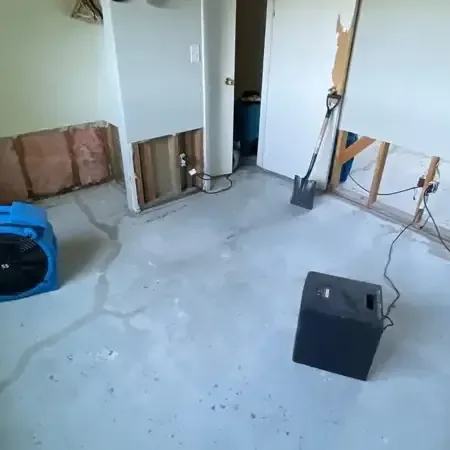
The first job is water extraction. Standing water is pulled from the floor before it wicks into drywall, cabinets and stored items.
Moisture meters then map the wet areas. Drywall that stayed wet, baseboards and insulation behind the tank are cut out if readings show they cannot dry in place.
Air movers and dehumidifiers finish the job. The water heater leak cleanup work ends when the readings match a dry reference.
Garage slabs and concrete floors dry slowly, so readings are repeated until the slab matches the dry reference. A floor that feels dry to the hand is not proof.
- Standing water extracted from floors and low spots.
- Wet baseboards and drywall removed where readings require it.
- Garage slabs and closet floors dried with air movers.
- A written log of readings and equipment at each visit.
- Insulation and drywall behind the tank checked with readings before anything is cut.
After the cleanup: the replacement and the records
A leaking tank is replaced, not repaired. The plumber handles the new heater, its connections and any drain pan.
A drying time estimator helps frame how long a wet space may need before it is ready for repairs.
Leaks from washers, dishwashers and other appliances follow similar steps, and appliance leak cleanup covers those sources.
A written list of damaged belongings and finishes helps with any claim. It also helps the restoration team decide which items can be cleaned and which have to go.
- Photos of the tank, its label and the first water.
- The plumber's invoice for the replacement.
- Moisture readings and the drying log.
- A list of damaged belongings and finishes.
Questions
How fast does a failing water heater flood a room?
A full tank can empty across a garage or closet floor in a short time. A slow weep can wet the base for weeks before it is noticed.
Does the age of the house tell the age of the water heater?
No. Tanks are replaced, so a house built after 1980 can have a much newer heater. The data label on the tank shows its own age.
Should the power to a leaking water heater be shut off?
Yes, when the breaker or gas control is dry and reachable. Otherwise the power is left for an electrician or plumber.
Is the garage slab a problem after a tank leak?
A slab holds water and releases it slowly, so readings are taken before the area is called dry. Boxes and wood bases that sit on the slab are lifted first, because they trap moisture against the concrete.
Can a leaking tank be patched?
No. A leaking tank is replaced. The cleanup and the replacement are planned together.
Is water from a leaking tank dirty?
It starts as clean water, but it picks up dust and dirt from the floor. Quick removal keeps it from becoming a larger problem.