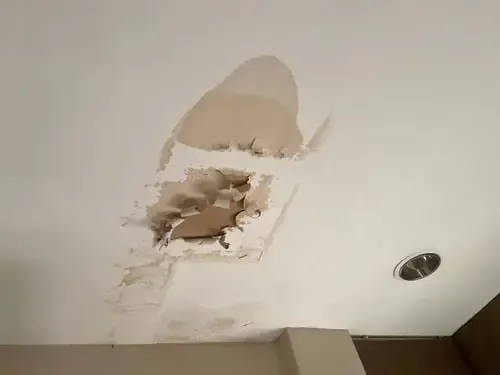
A brown ring, a bubbled patch of paint or a slow drip from a light fixture means water is coming from somewhere above the ceiling.
Key takeaways
- A stained ceiling is a symptom, and the source is usually a bath, a supply pipe, a drain or the roof above.
- The third phase of building brought the first two-story homes, and an upstairs bath sits right over a ceiling downstairs.
- Much of the developed community is single-family homes, townhomes and apartments, so the source may belong to a neighbor.
- A bulging ceiling can hold a lot of water, so people stay out from under it until the restoration team opens it safely.
- Joist bays and insulation above the ceiling need drying even when the surface looks fine.
Where a ceiling leak starts
Water that shows on a ceiling has already traveled. It follows a pipe, a joist or a sheet of drywall before it finds a place to drip.
That is why the stain is rarely right under the source. Tracing the route is the first step in deciding what to open.
A new leak leaves drywall that is soft and cool to the touch. An older one leaves a dry ring that darkens each time water returns.
- An upstairs shower pan, tub overflow or toilet seal that weeps during use.
- A supply pipe or drain running through the floor above the ceiling.
- A washer or dishwasher on an upper floor that leaks while it runs.
- Rain that gets past the roof and runs along attic framing.
- A condensate pan under an air handler that overflows.
Two-story homes and the third phase of Oak Park
Oak Park is an unincorporated community of Ventura County, not a city. The first homes went up in 1967, and the third phase brought the first two-story homes, with more homes following on the west side of Kanan Road.
Upstairs baths and laundry rooms
In a two-story house, every upstairs bath, laundry room and supply pipe sits over a ceiling downstairs. Showers, tubs and washers run for long stretches and put steady strain on seals and hoses.
A slow leak can soak the drywall below for weeks before a stain shows.
Single-story homes and attics
In a one-level home, a ceiling stain more often points to the roof or to a pipe that crosses the attic. The attic insulation shows the route the water took.
Roof leaks tend to show near exterior walls and along the ridge, while a leaking air handler pan shows near the unit itself. Where the stain sits is a clue, but readings settle the question.
Reading the stain: what its shape says
The shape of a stain helps point toward the source, though it never replaces moisture readings. A few patterns come up again and again.
Whatever the pattern, a restoration team confirms it with a meter before deciding how much to open.
- A brown ring with a darker rim: water has dried and returned more than once.
- A bubble or bulge: water is pooled in the drywall and may release suddenly.
- Peeling paint along a seam: moisture is working through the joint.
- Dripping from a fixture: water is following the wiring path, so power to that fixture stays off.
Townhomes and apartments: a leak from the unit above
The developed parts of Oak Park are mostly single-family homes, townhomes and apartments. The 2024 American Community Survey 5-year estimate counts 5,354 housing units and 5,099 households.
In a shared building, the water may come from a unit that belongs to someone else. The first move is to tell that neighbor, the owner or the building manager.
At the 2010 census about 25.5 percent of occupied units were rented, so one ceiling leak often involves a tenant, an owner and an insurer.
When the source is above, the unit that holds the leak often has to be opened as well. Early notice saves days.
- Photograph the stain and any dripping before anything is moved.
- Send a dated written note with photos to the owner or manager.
- Ask the unit above to stop using the fixture until the source is found.
- Keep receipts for emergency steps.
What to do when the ceiling is wet
A bulging ceiling can hold a surprising amount of water. Keep people and pets out from under it.
A restoration team opens a sagging ceiling in a controlled way, so the water drains into a container and not onto the floor.
Water inside a light fixture or ceiling fan means that circuit stays off until an electrician checks it.
- Stop the source if it is known by closing the fixture valve or the main shutoff.
- Move furniture and electronics out from under the stain.
- Leave wet light fixtures and ceiling fans off until they are checked.
- Photograph the ceiling first, then place buckets under active drips.
How the ceiling and joist bays are dried
Once the water source is stopped, the restoration team cuts out the wet drywall and any soaked insulation. The cut stays as small as the readings allow.
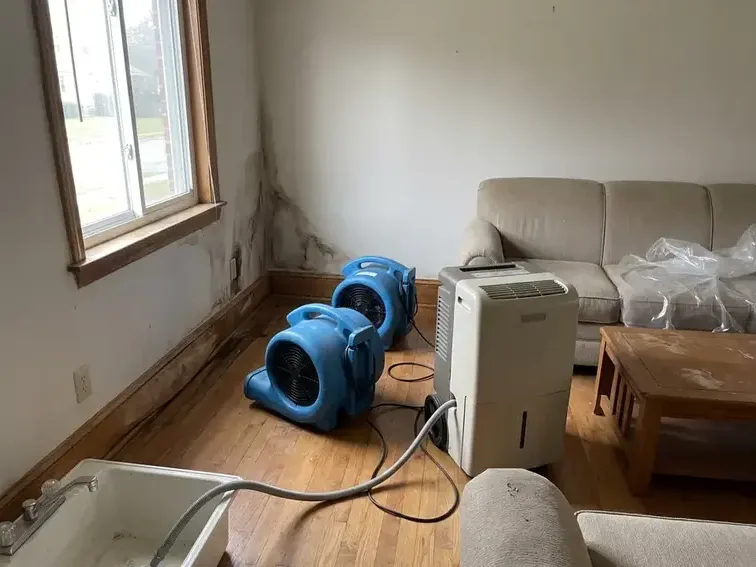
The joist bays above are dried with air movers and dehumidifiers. Moisture meters read the framing, and equipment stays until the framing matches a dry reference.
In a townhome the ceiling can be the floor of a neighbor's unit, so opening it may need coordination with the owner above. Plastic sheeting contains dust and insulation so the rest of the home stays clean.
The ceiling leak water damage work follows this order, and structural drying covers how dryness is measured.
- Wet insulation is removed, not dried in place.
- Framing is dried until readings return to the dry reference.
- Light fixtures are checked before they are used again.
- Stained drywall is replaced only after the cavity is dry.
Insurance, repairs and records
Coverage for a sudden pipe leak differs from coverage for a leak that ran for months, so the policy wording and the timeline both matter. Written records help either way.
Broader leaks that reach several rooms fall under water damage restoration in Oak Park, and the general process is described under ceiling leak restoration.
A plumber's written findings, even a short note, help show when and how the leak began. Insurers often ask for that timeline.
- Dated photos of the stain as found and again as it spreads.
- The plumber's findings on the source.
- Moisture readings from the drying visits.
- A list of damaged finishes and belongings.
Questions
Is a stained ceiling that looks dry still an emergency?
A dry stain can still sit on wet insulation and framing. Moisture readings show whether the cavity above has dried.
Can the ceiling just be painted once the stain fades?
Paint hides a stain but does not dry the cavity. Wet drywall and insulation above the paint can keep moisture in place.
Who pays when the leak comes from the unit above?
That depends on the lease, the building rules and the policies involved. A written notice to the owner or manager starts the record.
Should a sagging ceiling be poked to let the water out?
That is best left to the restoration team. A controlled opening keeps water, insulation and drywall from dropping into the room.
Where does the water usually come from in a two-story house?
Upstairs baths, laundry rooms and supply pipes are the usual sources. The roof and attic pipes come next.