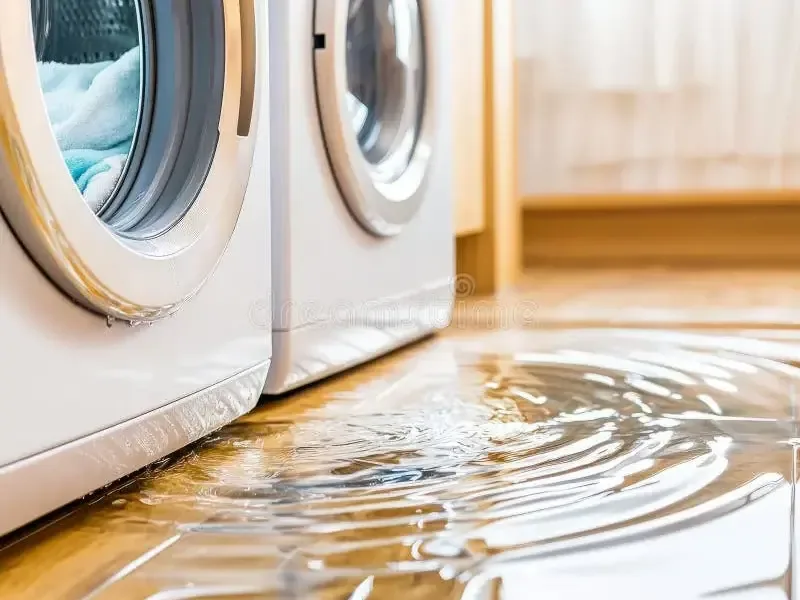
A washing machine hose lets go, a dishwasher drain slips or a toilet supply starts to weep, and the water is on a rented floor. The first steps are much the same for most tenants.
Key takeaways
- The city is majority renter: 54.0 percent of occupied units were rented in the 2018 estimate.
- Shut the water to the leaking appliance first, then photograph the water before anything is moved.
- A written, dated note to the owner or manager starts the record and protects the tenant.
- Water under cabinets and flooring keeps spreading after the surface is mopped, so extraction and moisture readings matter.
- The lease and the owner's policy decide who arranges and pays for repairs, and the tenant keeps receipts and notes.
Port Hueneme is a city of renters
The 2010 census found 51.7 percent of occupied units rented. The 2018 estimate put renters at 54.0 percent against a 46.0 percent homeownership rate.
Between 2000 and 2018 the homeownership rate fell and the share of renters rose. A leak in a rented unit is not unusual, and the steps that follow are often shared between a tenant and an owner.
The Southern California Association of Governments counted 8,276 housing units in 2018. About 61.2 percent were single family homes and 38.7 percent were multi-family.
The 2018 count was 2,690 single family detached homes, 2,371 single family attached homes, 953 units in buildings of two to four units and 2,253 units in buildings of five or more. Rentals therefore range from single houses to larger apartment buildings.
Because so many households rent, water damage is often a shared project among a tenant, an owner or manager and an insurer. Clear records make that easier for everyone.
The first steps at the moment of the leak
Mopping the surface helps, but it does not reach water that has run under cabinets, baseboards or flooring.
Waiting for the next rent cycle or the next maintenance visit lets water travel. Each extra day gives it more time to reach the subfloor.
Moving boxes stored on a closet floor or under a bed keeps a small loss small. Tenants are not expected to know the cause, and describing what was seen in plain words is enough.
- Close the shutoff valve to the leaking appliance, usually behind or beside it.
- If the leak keeps running, close the unit's main water valve.
- Unplug the appliance only if the outlet and the floor around it are dry.
- Photograph the water, the appliance and the floor before moving anything.
- Lift rugs, boxes and clothes off the wet floor.
- Close the small valve behind a leaking toilet by turning it clockwise.
Common sources in a rental kitchen, bath and laundry
Washer and dishwasher hoses
Rubber hoses can crack or slip off their fittings. A leak behind a washer or under a dishwasher can run for days before anyone sees it.
A machine on a wood or laminate floor pushes water into the seams. Vinyl and tile can hide a leak until the edges lift.
- Bulging or discolored flooring near the machine.
- A damp smell from the cabinet below the sink.
- A baseboard that has started to separate from the wall.
Toilet, sink and ice maker connections
A weeping toilet supply, a loose sink connection or cracked ice maker tubing wets cabinet bases and the floor around them. The leak often looks small while the subfloor soaks.
Quiet signs of a hidden leak
Some leaks never make a puddle. They soak flooring and cabinet bases from below and show only small changes at first.
Any of these signs is worth a photo and a note to the owner, even if the floor looks fine.
- Cabinet doors or drawers that swell, stick or no longer close flush.
- A floor that feels spongy, lifts at the seams or cups along the edges.
- Paint bubbling or peeling low on a wall near a kitchen, bath or laundry.
- A damp smell near a sink, washer or toilet that lasts more than a day.
- A baseboard that darkens or separates from the wall.
Telling the owner or manager in writing
A leak in a rental is reported to the owner or manager, and a written note is better than a spoken one. The note gives the date, the location and what was shut off, with photos attached.
A tenant with a renter's policy can also ask the insurer what it covers for belongings.
A message sent by text or email creates a time stamp. A follow-up note after the water is extracted and the readings are taken shows what changed.
- The date and time the leak was found.
- Where it started and what was shut off.
- Photos and a short video.
- A request for the owner's plan for repair and drying.
What the restoration team removes and dries
The first job is water extraction, pulling standing water from floors and from under the base of cabinets.
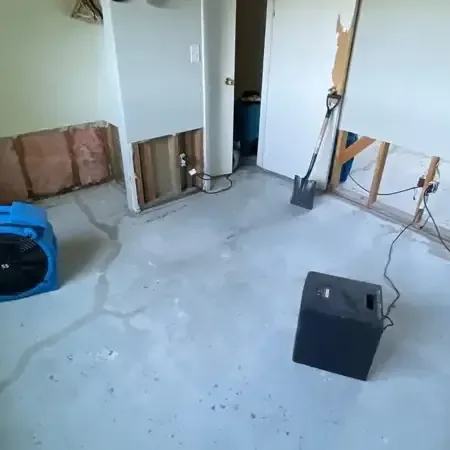
Moisture meters then show where the water traveled. Wet baseboards and cabinet toe kicks come off, and flooring is lifted in places so air can reach the subfloor.
Air movers and dehumidifiers run until readings match a dry reference. The appliance leak cleanup work in a rental follows the same steps as in an owned home.
Readings are taken again at each visit, and the equipment comes out only when the meters match a dry reference. The tenant receives a record of the drying steps that can go to the owner and insurer.
- Standing water extracted from the floor.
- Wet baseboards and toe kicks removed where water got behind them.
- Subfloor and flooring edges dried with air movers.
- Readings recorded so the owner and insurer can see the result.
Who arranges the repair, and what the tenant keeps
The lease and the owner's policy decide who arranges the repair. The tenant's part is to report promptly, protect belongings and keep a record.
Bigger losses, such as a leak that reaches the next room, fall under water damage restoration in Port Hueneme, and supply hose and appliance leak cleanup covers the usual sources.
- Copies of every message to the owner or manager.
- Receipts for any emergency purchases.
- A list of damaged belongings with approximate values.
Questions
Who is responsible for water damage in a rented unit?
It depends on the lease, the cause of the leak and the policies involved. A prompt written report to the owner or manager keeps the record clear.
Is mopping enough after a washer hose leaks?
Usually not. Water runs under cabinets and baseboards, so moisture meters are needed to find where it went.
Does the tenant have to move out during drying?
Not always. Small losses are dried while people stay, and larger ones may need rooms cleared. The restoration team and the owner decide with the readings in hand.
What if the leak came from the unit above?
It is still reported to the owner or manager in writing, with photos. Ceiling and wall cavities are checked for moisture.
Does renters insurance cover the floor?
Often the owner's policy covers the building and a renter's policy covers belongings, but the wording of each policy decides.
How soon should a tenant report a small leak?
As soon as it is found. A small leak can become a large loss, and an early written report shows the tenant acted promptly.