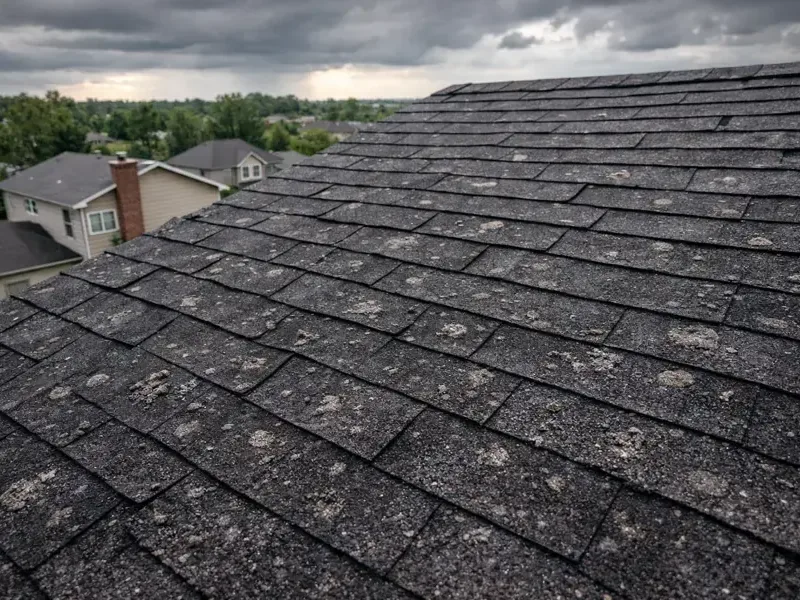
After months with almost no rain, a roof gets its first real test in the fall or winter storms. A weak spot that stayed quiet all summer can start dripping into the attic the same night.
Key takeaways
- From June through September the city averages less than a tenth of an inch of rain a month, so roof problems can go unnoticed for months.
- The wettest months are February at 3.81 inches, January at 3.59, March at 2.81 and December at 2.63, out of 16.06 inches a year.
- A ceiling stain usually shows after water has already soaked the attic insulation, so the real damage sits above it.
- Quick steps are to protect belongings, catch drips, photograph the damage and keep people out from under a bulging ceiling.
- Wet insulation is removed and the ceiling cavity is dried to a dry reference before new drywall goes in.
Why a dry summer hides roof problems
A roof leak needs water to show itself. From June through September, Ventura averages less than a tenth of an inch of rain in each month, so cracked sealant, lifted flashing or a gap around a vent can sit unnoticed.
Sun and heat age roof surfaces and sealants while the rain stays away. The first storm then finds every gap at once.
Wind can lift edges and push debris against flashing during the dry months, and those small changes matter once rain arrives.
The result is a pattern many owners recognize: a dry summer, a first storm and a ceiling stain the next morning.
What 16.06 inches a year looks like month by month
The city averages 16.06 inches of rain a year. The wettest months are February at 3.81 inches, January at 3.59 inches, March at 2.81 inches and December at 2.63 inches.
Those four months bring most of the rain, so a roof that holds through a light October shower may still fail in the heavier weeks of winter.
- June to September: under a tenth of an inch a month, and leaks stay hidden.
- December: 2.63 inches, and the first steady storms test flashing and valleys.
- January: 3.59 inches, and saturated attic insulation starts to show as stains.
- February: 3.81 inches, the wettest month, when a minor leak becomes ceiling damage.
- March: 2.81 inches, and late storms can finish off a weakened ceiling.
Signs of a roof leak inside the house
Water usually shows inside long after it entered the roof. It runs along rafters and insulation before it reaches drywall.
Any one of these signs deserves a closer look, because the visible stain is usually smaller than the wet area above it.
- A yellow or brown stain on a ceiling that spreads after each storm.
- A bubble or sag in the drywall, a sign that water is pooled behind it.
- Paint that peels or blisters near an exterior wall.
- A damp or musty smell in a hall closet or upstairs room.
- Drips from a light fixture or vent during heavy rain.
A short check before the rain arrives
The best time to look at a roof is before the first storm. The goal is to spot gaps from the ground or the attic, not to climb up.
Roof repair itself is work for a roofer, and water cleanup is a separate job.
From the yard
A walk around the house shows more than most owners expect.
- Look for lifted, cracked or missing roof material along the edges.
- Check gutters and downspouts for debris that could push water back under the roof edge.
- Notice sealant or metal around chimneys and vents that has pulled away.
From the attic
A flashlight and a careful look can catch early signs.
- Look for dark stains on the underside of the roof deck.
- Look for compressed or discolored insulation.
- Check around vent pipes and the ceiling below them.

What to do while it is leaking
A temporary tarp or patch from a roofer limits more rain, but the water already inside still needs to be dried.
Water that finds an electrical fixture is a safety problem. Leave switches off and avoid standing under a ceiling that is dripping or bulging.
- Move furniture, electronics and rugs out from under the stain.
- Set a bucket under any drip and lay towels to protect the floor.
- Photograph the stain, the drips and the room before anything is moved.
- Keep people out from under a bulging or sagging ceiling.
- Leave wet light fixtures off until they are checked.
How the ceiling and attic are dried
The restoration team starts by finding the extent of the wet area with moisture meters and thermal imaging.
Wet insulation is removed and bagged, because it holds water and does not dry well in place. Drywall that is soft, stained through or sagging is cut out.
Air movers and dehumidifiers dry the framing and the open cavity. The ceiling leak water damage work continues until readings match a dry reference, and then new drywall can go in.
The roof opening has to be repaired as well, or the next storm repeats the loss. The same steps apply across roof leak water damage cleanup.
- Saturated insulation is removed and bagged.
- Drywall that is soft or stained through is cut out.
- Paint and texture are removed only where the material is wet.
- Framing stays in place and is dried to a dry reference.
Insurance and housing in Ventura
The 2020 census counted 44,612 housing units in Ventura. Of the occupied units, 55.3 percent were owner-occupied and 44.7 percent were rented, so roof leaks often involve an owner, a tenant and an insurer.
Coverage depends on the policy wording and the cause of the opening. A written record of when the leak was found and what was done helps in either case.
Wider losses that reach several rooms fall under water damage restoration in Ventura, and the general process is outlined under roof leak restoration.
Landlords and tenants both gain from the same record. A date-stamped photo of the first stain shows when the leak began and how it changed.
- Dated photos of the stain and, where visible, the roof area.
- A roofer's report on the opening and the repair.
- Moisture readings and drying logs from the restoration team.
- Receipts for tarps, patches and emergency steps.
Questions
Why does a roof leak appear after months of dry weather?
Dry months hide gaps because nothing tests them. The first steady rain finds cracked sealant, lifted flashing or a loose vent collar all at once.
Does a small ceiling stain mean small damage?
Not necessarily. The stain can be much smaller than the wet insulation and framing above it, which is why moisture readings are taken.
Can a tarp fix a roof leak?
A tarp limits more rain, but it does not dry what is already wet. A roofer handles the permanent repair, and the restoration team handles drying.
When is the risk of a roof leak highest?
In the wettest months: February at 3.81 inches, January at 3.59 inches, March at 2.81 inches and December at 2.63 inches.
Is a roof leak covered by insurance?
Coverage depends on the policy wording and the cause of the opening. Photos, a roofer's report and drying logs support a claim.
Should the attic be checked after a storm?
Yes, with a flashlight, looking for dark stains, wet insulation and drips around vent pipes. A wet attic can sit above a dry-looking ceiling.