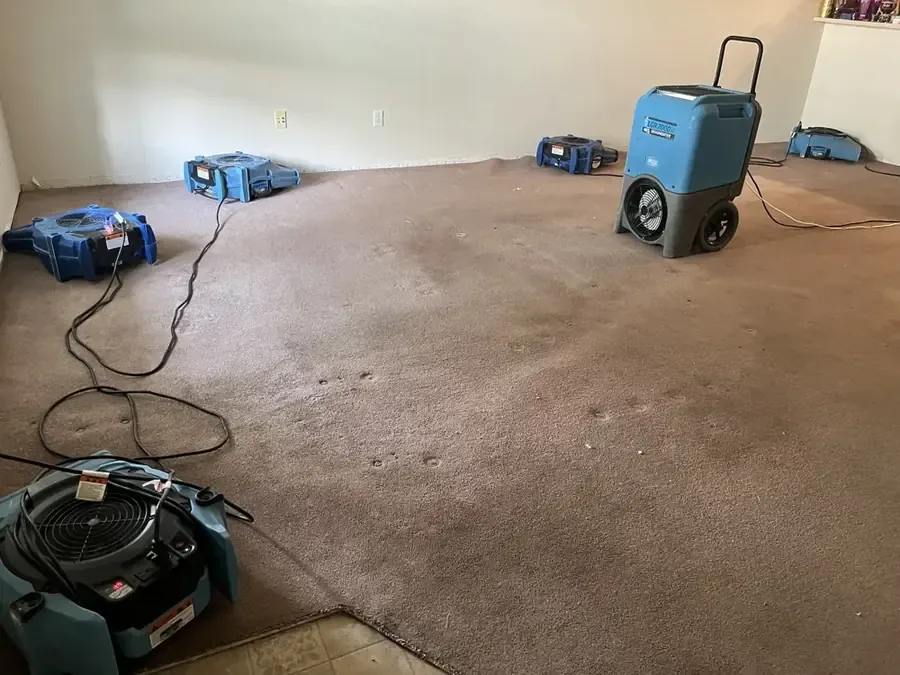
Nights in the valley fall below freezing at times, and a pipe that froze overnight often shows its damage only when the day warms up and the ice begins to melt.
Key takeaways
- The mean daily minimum is 34.5 F in January and 33.2 F in December, and the record low is 13 F.
- In dry spells valley mornings can run colder than most of Southern California.
- A split pipe leaks when the ice melts, so the water often shows up at the thaw and not during the night.
- Find the main shutoff before winter and close it at the first sign of a leak.
- The restoration team extracts the water, opens walls only where readings point and dries the framing to a dry reference.
How cold Ojai gets
The valley has a Mediterranean climate with hot dry summers and mild wet winters, and most rain falls between October and April. The nights tell a different story.
The mean daily minimum is 34.5 F in January and 33.2 F in December. Valley nights fall below freezing at times, and the record low is 13 F on January 6 to 7, 1913.
In dry spells valley mornings can run colder than most of Southern California, which is when exposed pipes are at the most risk.
Which pipes freeze first
A pipe does not burst simply because water turns to ice. It splits because ice blocks the pipe and pressure builds between the ice and a closed faucet.
Pipes in outside walls with little insulation are the usual suspects. Pipes inside warm interior walls rarely freeze.
- Hose bibs and short outdoor pipes without insulation.
- Supply pipes on exterior walls.
- Pipes in unheated spaces such as a garage or utility area.
- Irrigation pipes that run above ground.
- Supply pipes to a water heater in a cold garage.
The thaw moment: why the leak starts when the day warms
A frozen pipe can sit cracked and quiet. When the ice melts, water flows through the split and into the wall, the ceiling or the floor.
That is why many owners find a wet wall or hear running water in the morning, after the freeze has passed.
Small splits may only seep at first, so water can run quietly for a long while before anyone sees a stain. A large split shows itself quickly, with water running down a wall.
- No water or only a weak trickle at a faucet on a cold morning.
- Frost on a visible pipe.
- The sound of running water inside a wall.
- A wet spot on a ceiling or wall below the pipe.
What a split pipe does inside a wall
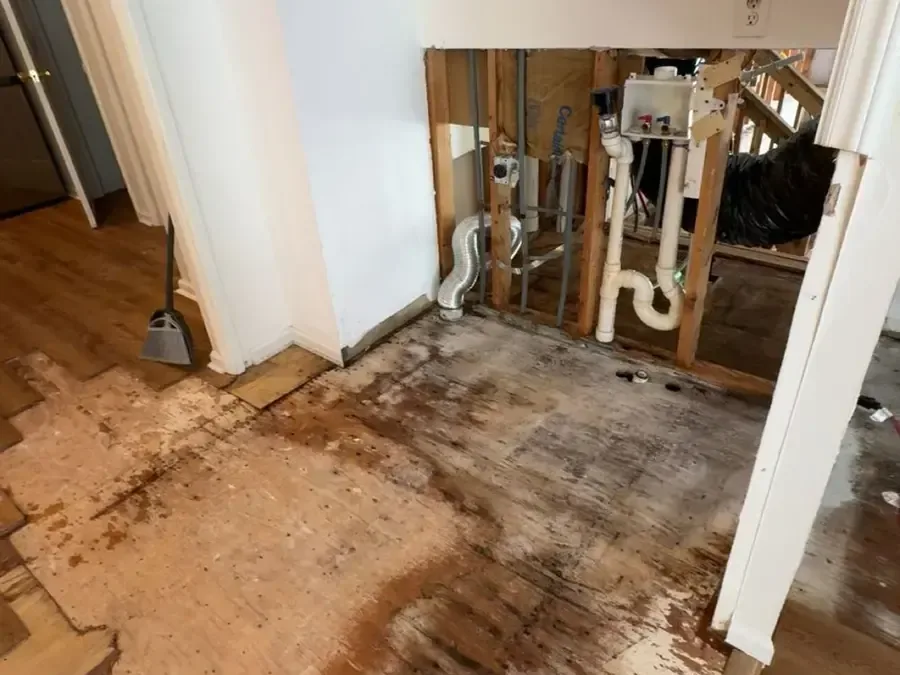
A split in a pipe on an exterior wall sends water down the wall cavity. It soaks the insulation, runs along the bottom plate and appears at the baseboard or under the floor.
A split in an attic or ceiling space does the opposite. Water comes down through the ceiling below, often far from the pipe itself.
- Wet insulation holds water against the framing.
- Baseboards swell and separate from the wall.
- Flooring near the wall edge cups or buckles.
- Paint blisters on the lower wall or the ceiling below.
Shutoff first, then drying
Closing the main stops new water from reaching the split. Faucets can then be opened to drain what remains in the pipes.
Find and close the main
Every household should know where the main shutoff sits before winter starts. A valve that has not been turned in years should be tested before it is needed.
- Find the main shutoff and make sure it turns.
- Mark it so anyone in the house can find it.
- Close it at the first sign of running water in a wall.
- Know whether the valve is a lever or a wheel handle and which direction closes it.
Who provides the water
Casitas Municipal Water District took over management of the Ojai water system in April 2017. Meiners Oaks, in the Ojai Valley, has its own water provider, the Meiners Oaks Water District, so the provider depends on the address.
What the restoration team does after a pipe splits
The first job is water extraction, because standing water on a floor wicks into walls and cabinets quickly.
Moisture meters then show how far the water traveled. Walls and ceilings are opened only where readings point, which keeps the cutting small.
Air movers and dehumidifiers dry the framing and the open cavity. The burst pipe water damage work ends when readings match a dry reference.
Floors that got wet are checked next. Hardwood and laminate can cup or swell, and cabinets under a sink absorb water from below.
Drying works best in a warm house, so the heat stays on while the equipment runs. A cold, damp room slows the dry-out and keeps moisture in the framing longer.
- Standing water extracted from floors and low spots.
- Wet insulation and soaked drywall removed where readings show they cannot dry in place.
- Framing dried with air movers and dehumidifiers.
- Readings recorded at each visit.
Records, prevention and what comes next
A burst pipe is a sudden loss, and insurers usually want a record of when it happened and how it was stopped. Photos of the split, the water and the damaged rooms help.
A plumber repairs the pipe, and the restoration team dries the house. Wider losses that reach several rooms fall under water damage restoration in Ojai, and the general process is outlined under burst pipe restoration.
Insurers often separate a sudden burst from slow seepage, so the date and the way the leak was stopped carry weight. Moisture readings and drying logs show the work was done to a standard.
Keeping pipes from freezing on cold nights
A few small steps cost little and prevent the thaw moment altogether.
None of these steps needs special tools. Together they cut the chance of a split pipe on the coldest mornings.
An empty second home or a rental between tenants needs the same care, because nobody is there to notice a split pipe.
- Disconnect and drain garden hoses before cold nights.
- Open cabinet doors under sinks on exterior walls.
- Let a faucet drip when a hard freeze is forecast.
- Wrap exposed pipes in unheated spaces.
- Keep the heat on if the house will be empty.
Questions
Does the valley get cold enough to freeze pipes?
Yes, at times. The mean daily minimum is 34.5 F in January and 33.2 F in December, and nights fall below freezing in cold spells. The record low is 13 F.
What should be done first when a pipe is leaking?
Close the main shutoff to stop new water, then photograph the damage and begin extracting standing water. A plumber is needed for the repair.
Can a frozen pipe be thawed safely?
Only slowly and only if it has not split. Gentle warm air is safer than anything hot, and a pipe that is already leaking needs a plumber.
Who provides water in the valley?
It depends on the address. Casitas Municipal Water District took over management of the water system in April 2017, while Meiners Oaks has its own district.
How does the team know a wall is dry?
Moisture meters read the framing and drywall against a dry reference. The equipment stays until readings match.
Should the heat stay on in an empty house during a cold spell?
Yes. Keeping the heat on and cabinet doors open slows freezing in pipes along exterior walls, which is where most splits start.