A burst pipe or roof leak in a working building raises one question first: how much of the business can keep running while the water is removed?
Key takeaways
- Phased drying splits a building into zones, so one section dries while another keeps operating.
- The city's economy includes defense, international trade, agriculture, manufacturing and tourism, and each one has stock, equipment and records worth protecting.
- The first day is about shutting off the source, lifting stock off wet floors and documenting the loss before anything is thrown away.
- Concrete floors and wall bases are measured with moisture meters, not judged by feel.
- Written records of the loss, the downtime and the drying steps support an insurance claim.
What water does to a working building
Water in a shop or warehouse moves in two directions at once. It spreads across the floor, and it wicks up walls, racks and cardboard.
Stock on low shelves, pallets on the slab and paper records are usually the first losses. Electrical equipment and flooring follow.
The longer water stays in a building, the more it costs. Materials that could have been dried in place become materials that have to be replaced.
Hidden spaces matter. Water that runs under racking, behind shelving or into a ceiling grid can stay wet long after the open floor has dried.
- Cartons and packaging soak up water and lose strength.
- Wall bases and baseboards wick moisture upward.
- Floor coverings trap water against the slab.
- Equipment with air intakes near the floor can draw in damp air.
Why phased drying keeps the doors open
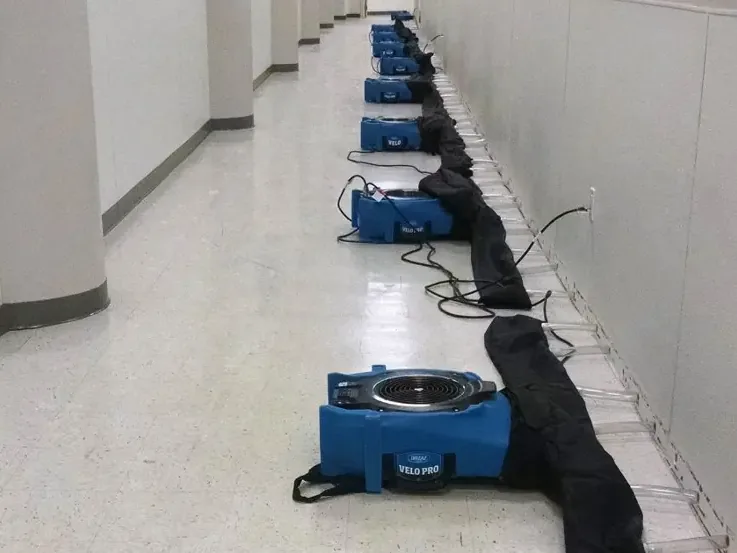
Phased drying divides the building into zones. Containment barriers separate the wet zone from the working zone, and equipment runs where the readings require it.
While one area is extracted and dried, a loading area, an office or a sales floor can often stay in use.
Zones and barriers
Plastic barriers and taped seams keep dust and humidity inside the zone being dried. Air movers and dehumidifiers are placed so cords and noise stay out of walkways.
A zone map is drawn at the start and updated as equipment moves, so staff know which doors and aisles are open.
Moving the work to follow the readings
At each visit the moisture meters are read again. Equipment moves to the zones that are still wet and leaves the ones that are done.
Safety and access
Barriers, signs and clear paths keep staff and visitors away from wet floors and equipment. Exits and loading doors are never blocked.
Oxnard's mix of buildings and industries
Oxnard is a city of mostly one and two story buildings, and its economy includes defense, international trade, agriculture, manufacturing and tourism.
A tourism business worries about guest areas and floors. A manufacturer worries about machinery and production schedules.
A grower or importer worries about stock on pallets.
The commercial landscape runs from Channel Islands Harbor, with its boating and commercial fishing moorings, to Oxnard Airport, a general aviation airport owned and operated by the County of Ventura. The Oxnard Performing Arts and Convention Center adds a public venue to that mix.
For a shop or plant, water damage restoration in Oxnard has to fit around operations, not the other way round.
The size of the building matters less than the way the space is used. A small shop with customers inside needs a different plan from a large warehouse with a quiet back corner.
A first-day checklist for the manager
After that, the restoration team extracts standing water and maps moisture across the floor, walls and ceiling. The commercial water damage plan is built from that map.
Utilities come next. Heating and cooling units that draw air near the wet floor may be shut down while the zone dries, and restrooms or break rooms outside the wet zone usually stay in use.
- Shut off the water at the nearest valve or the main.
- Cut power to wet areas only if the panel is dry and reachable; otherwise let an electrician do it.
- Lift stock, files and equipment off the wet floor onto dry racks.
- Photograph the loss before anything is moved or discarded.
- List the affected rooms, equipment and inventory.
- Tell the building owner, the insurer and key staff.
Common sources in a commercial building
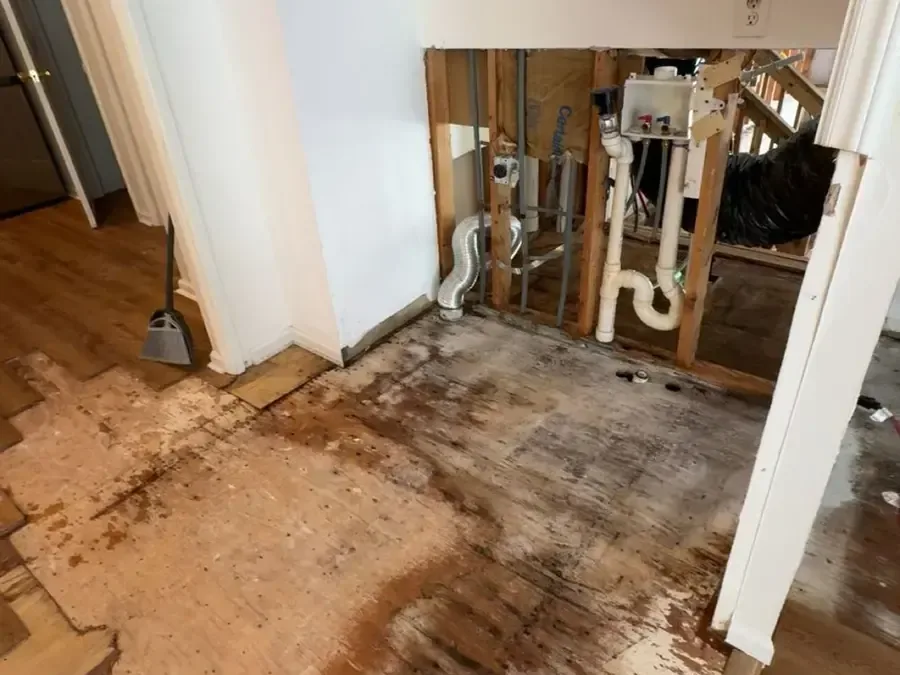
Most commercial losses start in a few predictable places. Knowing them helps a manager decide where to look first.
A single source can wet several tenants or departments, so the first walk-through covers every room under or beside the wet area.
- A burst or failed supply pipe in a wall, ceiling or utility room.
- A roof leak that follows rain through insulation into a ceiling grid.
- A water heater, boiler or restroom fixture that fails overnight.
- Storm water that enters at a dock door or a low threshold.
- A drain that backs up after heavy use.
Concrete, walls and the dry standard
Concrete slabs hold water and release it slowly, so a floor that looks dry can still be wet below the surface. Wall bases and ceiling tiles need readings too.
Structural drying continues until readings sit within 2 to 4 points of a dry reference. The drying log records each visit.
Wet ceiling tile, insulation and wallboard that cannot be dried are removed and replaced. Salvageable materials are dried in place.
Floor coverings such as vinyl, tile or carpet over a slab can trap moisture. Lifting them in sections lets the slab release water without closing the whole space.
- Moisture maps show which walls and slabs are still wet.
- Equipment placement changes as zones finish.
- Daily logs list readings, equipment and steps.
Insurance, downtime and records
Business policies often treat property damage and lost income separately. The wording decides what is covered, so it helps to read it before the work is scheduled.
The same documentation applies to every commercial water damage loss, large or small.
Ordering the steps this way keeps the claim file and the drying log pointing at the same facts, which makes later questions easier to answer.
- Dated photos and video of the loss.
- Inventory lists with quantities and values.
- Daily logs of drying equipment and readings.
- A record of closed days or reduced operations.
Questions
Can a business stay open during water damage drying?
Often, in part. Containment barriers and zoned equipment let unaffected areas keep running while the wet zone is dried. Readings and safety decide what stays open.
What happens to wet inventory?
Stock that touched the water is sorted. Items that can be dried or cleaned are saved, while porous packaging and goods that cannot be cleaned are documented and removed.
How is a concrete floor judged dry?
Moisture meters read the slab and nearby wall bases against a dry reference. Equipment stays until readings sit within 2 to 4 points of it.
Is a roof leak handled differently from a burst pipe?
The drying steps are the same, but a roof leak adds a repair of the opening so the next rain does not repeat the loss. Storm water that enters at ground level is handled as contaminated.
Who documents the loss for the insurer?
The restoration team logs readings, equipment and steps at each visit. The business adds photos, inventory lists and downtime records.
Which areas usually dry last?
Concrete slabs, wall bases and cavities behind fixed cabinets or racks dry last, because air reaches them slowly. Readings show when each one is done.